
Desk-Related Neck and Back Pain: A Better Workday, Not Perfect Posture
Updated: Oct 30
Desk-related neck and back discomfort is not solved by holding one “perfect” posture all day. A more practical starting point is a comfortable workstation, opportunities to change position and attention to the tasks that bring symptoms on.
Workstation changes can improve comfort, but they do not diagnose the cause of pain or guarantee prevention. Persistent, worsening or unusual symptoms deserve an assessment rather than another chair adjustment.
For an Edmonton office worker, that might mean reviewing a laptop setup, a long commute, back-to-back video meetings or a home workspace that changes from day to day. The goal is a workable routine, not another rule to follow rigidly.
Look at the task, not just the chair
The Canadian Centre for Occupational Health and Safety emphasizes comfortable working positions and changes of position rather than holding one supposedly ideal posture indefinitely. It also recommends arranging equipment to reduce unnecessary reaching and awkward positions. See CCOHS: Sitting comfort and position changes.
Start with the task you do most often. Reading a document, typing, using two screens and taking a phone call may each need a different arrangement.
Start with adjustments you can make without buying new equipment. Keep the keyboard and mouse within comfortable reach, position the main screen so you are not repeatedly twisting to view it, and support your feet and arms where helpful. With a laptop, a separate keyboard and mouse may allow screen height and hand position to be adjusted independently.
Treat these as experiments. A setup is useful when it helps you work more comfortably, not when it looks correct in a photograph.
Make movement possible during the day
A standing desk can give you another option, but standing motionless all afternoon is not the objective either. Build opportunities to change tasks and positions.
Use natural pauses in the workday to change tasks or position—for example, a brief movement break between calls or a non-screen task after concentrated computer work. Choose changes that fit your mobility, symptoms and job. The aim is useful variety, not a rule that everyone must stand or walk at a particular interval.
CCOHS describes movement breaks and workstation adjustments as complementary approaches. Stretching alone does not address an awkward setup or the demands of remaining in one position for long periods. Its office guidance is a useful starting point: CCOHS: Office ergonomics and movement breaks.
You do not need to perform a complicated exercise routine at your desk to begin noticing what helps.
Run a simple workday experiment
For a few ordinary workdays, note the task that is uncomfortable, roughly how long you have been doing it and whether a position or task change helps. A few observations are enough; there is no need to keep checking your posture or symptoms throughout the day.
Then choose one practical adjustment. For example, separate a long block of screen work with a brief non-screen task, or move your mouse closer so reaching is easier.
Keep other changes modest. Changing the chair, desk height, exercise routine and work schedule at once makes it hard to identify what mattered.
At the end of the experiment, ask whether the adjustment made work easier, whether you actually used it and whether another problem needs attention. This is a personal observation exercise, not a way to diagnose the source of pain.
Where does massage fit for desk workers?
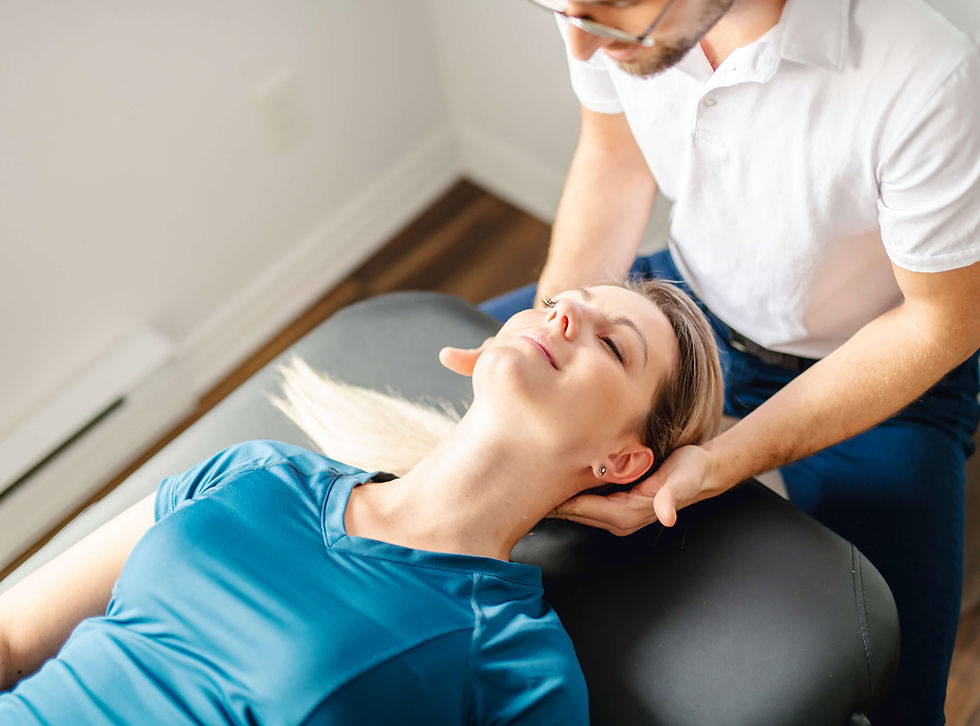
If you are considering massage for desk-related discomfort, give the appointment a clear purpose. You might want to discuss neck and shoulder tension, help making a particular task more comfortable, or a session focused on relaxation. Those goals should guide the conversation about whether massage is appropriate and how you will review its value.
Keep expectations specific. A 2024 Cochrane review of massage for neck pain found uncertain evidence overall; compared with a placebo massage, benefits around 12 weeks were small or absent for several outcomes in people with subacute or persistent neck pain. This does not establish what an individual will experience, but it does not support promising a lasting fix for desk-related pain.
Massage also does not change the demands of your job. Continue reviewing the tasks and workstation issues that matter to you. If symptoms suggest something requiring assessment, do not assume they are simply tight muscles.
Bring the workday into your massage appointment
Tell your therapist what the discomfort interrupts, what you have tried and what response you would consider useful. Mention relevant health conditions, medicines, recent injuries and symptoms such as tingling or weakness. The NCCIH massage overview explains why medical history and appropriate precautions matter.
Discuss pressure, areas you want included or avoided, and how you will communicate during the session. You can ask for a change or stop. There is no need to endure unwanted pressure to make an appointment worthwhile. Our guide to massage pressure and discomfort covers that conversation in more detail.
Review the result against your goal
Use a brief note rather than a constant symptom diary:
Before: what ordinary task would you like to feel easier?
After: what changed, if anything, and how long did you notice it?
Trade-offs: was there soreness or another effect you want to discuss?
Next decision: continue, change the approach, seek another assessment or stop?
Feeling relaxed can be a worthwhile personal goal. If your goal is more comfortable work, also consider what happens during the workday. Repeated appointments should have a reason you understand. Explore massage therapy at 4 Points and preparing for a massage appointment when you are ready to discuss your options.
Massage for desk-related discomfort with Reno On
Reno On, Registered Massage Therapist, has a particular interest in the aches and tension that can come with long hours at a computer. If massage fits your needs, he can work with you on an appointment focused on comfort and the areas affecting your workday.
Bring one concrete example: the neck discomfort that interrupts video calls, the shoulder tension you notice while using a mouse, or the way you feel after switching between a laptop and a larger screen. Tell Reno what you have already changed and what difference, if any, it made. This helps keep the conversation grounded in your day rather than a general request to “fix my posture.”
Agree on how you will judge the visit: feeling more comfortable, tolerating a particular task more easily, or learning whether another assessment is needed. Keep the workstation and movement changes that suit you in view as well. View massage appointments with Reno On.
When workstation changes are not enough
Arrange assessment when symptoms persist, worsen, disturb sleep or interfere with ordinary activity. Bring the workstation observations with you, but do not delay care to finish the experiment when the symptoms concern you.
An assessment can explore the history, examine relevant movement and function, and help determine whether rehabilitation, medical review or another approach is appropriate. For an overview of assessment and consent, see the College of Physiotherapists of Alberta: What to expect guide.
Seek urgent medical advice for new or progressive weakness, significant neurological changes, serious injury or symptoms suggesting a medical emergency. A routine ergonomic adjustment should not delay necessary care.
Bring your workday into the appointment
Bring a description of the difficult tasks. A photograph of an empty workstation can help when your workplace permits it, but remove confidential material from screens, papers and noticeboards first. Do not include coworkers or personal information. A written description is enough when photography is not appropriate.
Describe what the symptom interrupts: “My neck becomes uncomfortable during long video meetings” gives the clinician both the symptom and the task to work with. Mention commuting, lifting or other demands that also affect your day.
Ask what you can continue, what to modify temporarily, what improvement to monitor and when the plan should be reviewed. A useful recommendation should fit your work responsibilities and resources.
A more comfortable day is the goal
At 4 Points, the headache and neck-pain page and physiotherapy service page can help you explore assessment options. Contact the clinic when you are unsure which appointment fits.
The aim is not to hold yourself perfectly. It is to understand the problem, make sensible changes and get appropriate help when those changes are not enough.
This article provides general information and does not replace an individual assessment.
Related reading
Related guides cover a lower-back pain flare-up, shoulder pain when reaching overhead, and planning workplace wellness around employee needs.

Comments